


Aluminum Foundry services are essential for producing lightweight, durable, and dimensionally controlled metal components across automotive, machinery, electrical, and industrial applications. With extensive casting experience, Xuxing provides customized aluminum casting solutions using sand casting, permanent mold casting, gravity die casting, and low-pressure die casting processes to match different component designs, production volumes, and performance requirements.
An aluminum foundry transforms aluminum alloys into functional components through controlled melting, mold filling, cooling, solidification, and finishing. The selected casting method directly affects dimensional accuracy, structural integrity, surface quality, tooling investment, and production efficiency. For engineers and purchasing teams, understanding the differences between casting processes is important when selecting a manufacturing partner. This guide explains the main aluminum foundry processes, material considerations, applications, quality factors, and practical criteria for evaluating a casting supplier.
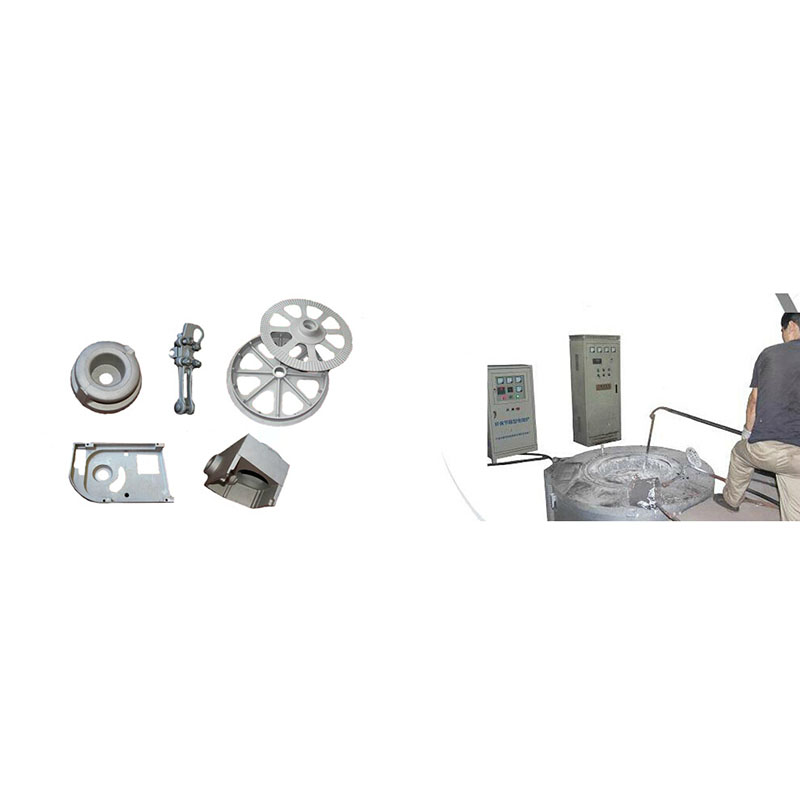
Table of Contents
How Does the Aluminum Foundry Process Work?
Which Casting Methods Are Used in an Aluminum Foundry?
How Does Aluminum Alloy Selection Affect Casting Performance?
What Applications Can Aluminum Foundry Products Serve?
What Quality Factors Should Buyers Evaluate?
How Should You Choose an Aluminum Foundry?
What Is an Aluminum Foundry?
An aluminum foundry is a manufacturing facility specializing in converting aluminum alloys into cast components. The basic production route starts with preparing aluminum material, melting it under controlled conditions, transferring the molten metal into a prepared mold, allowing it to solidify, and then removing and finishing the casting.
The major advantage of aluminum is its combination of low density, corrosion resistance, thermal conductivity, machinability, and versatility. These characteristics make cast aluminum suitable for components where weight, structural performance, dimensional requirements, and production efficiency must be balanced.
A professional foundry does more than simply pour molten metal into a mold. Engineers must consider part geometry, wall thickness, alloy composition, mold design, filling behavior, cooling conditions, machining allowances, and the intended application before determining an appropriate casting process.
How Does the Aluminum Foundry Process Work?
A reliable casting operation depends on controlling every stage rather than focusing only on the final molding step. A typical workflow includes the following stages:
- Material preparation: Aluminum ingots or approved recyclable material are prepared according to the required alloy specification.
- Melting: The aluminum is heated in a furnace until it reaches a suitable molten condition for the selected casting process.
- Alloy and melt treatment: Chemical composition, cleanliness, and melt condition are controlled to support consistent casting performance.
- Mold preparation: The mold is prepared according to the component geometry, required tolerances, and production method.
- Casting: Molten aluminum enters the mold through gravity, low pressure, or another controlled filling method.
- Cooling and solidification: The casting is allowed to solidify under controlled conditions to minimize defects and dimensional variation.
- Finishing: Gates, runners, flash, and other excess material are removed. Additional machining or surface treatment can be applied when required.
- Inspection: Finished components are checked against the agreed dimensional, visual, and functional requirements.
Temperature management is particularly important. Excessive variation in molten metal or mold temperature can influence filling behavior, solidification, shrinkage, surface quality, and dimensional stability. This is why process control should be considered when evaluating an aluminum casting supplier.
Which Casting Methods Are Used in an Aluminum Foundry?
Different components require different manufacturing approaches. A capable aluminum foundry may combine several casting technologies instead of applying one process to every project.
| Casting Method | Main Characteristics | Typical Application | Key Advantage |
|---|---|---|---|
| Sand Casting | Uses a sand mold to form the component | Large, complex, or lower-volume parts | Flexible tooling and lower initial mold cost |
| Permanent Mold Casting | Uses reusable metal molds | Repeated production of relatively consistent components | Good repeatability and structural integrity |
| Gravity Die Casting | Molten aluminum fills a reusable mold under gravity | Industrial housings and mechanical components | Balanced quality and production efficiency |
| Low Pressure Die Casting | Low pressure pushes molten aluminum gradually into the mold | Structural and pressure-related components | Controlled filling and consistent casting quality |
| High Pressure Die Casting | Molten metal is injected into a die at high pressure | Complex, high-volume components | Fast production and detailed geometry |
For example, aluminum sand casting can be practical for larger or geometrically complex parts where flexible tooling is valuable. Permanent mold and gravity die casting can provide a reusable tooling solution for repeated production, while low-pressure aluminum casting is useful when controlled filling and structural consistency are important.
The appropriate method should therefore be selected according to component geometry, annual volume, material requirements, dimensional tolerances, tooling budget, and final application.
How Does Aluminum Alloy Selection Affect Casting Performance?
Aluminum alloys do not have identical characteristics. Alloy selection can influence fluidity, strength, machinability, corrosion resistance, thermal performance, and the final casting's suitability for a particular application.
Common casting alloy considerations include:
- Mechanical strength: Important for structural and load-bearing components.
- Machinability: Particularly relevant when the casting requires CNC drilling, milling, boring, or precision finishing.
- Corrosion resistance: Valuable for components exposed to moisture, chemicals, or outdoor environments.
- Castability: The alloy should flow and solidify appropriately for the selected mold design.
- Thermal properties: Important for housings, heat-related equipment, and components exposed to temperature changes.
- Application requirements: The alloy should be selected based on the actual operating environment rather than simply choosing a commonly used grade.
For instance, A356 aluminum is commonly associated with applications requiring a useful combination of strength and castability. Other alloy families may be considered when machinability, structural performance, or specific application characteristics take priority.
What Applications Can Aluminum Foundry Products Serve?
Aluminum castings can be found in a broad range of industrial products because manufacturers can produce both relatively simple and highly engineered geometries.
Automotive Components
Cast aluminum can be used for housings, wheels, structural components, transmission-related parts, and other weight-sensitive applications.
Industrial Machinery
Pump components, gear housings, machine bodies, filter bases, air-cylinder components, and other mechanical parts can benefit from aluminum casting.
Electrical Equipment
Aluminum's electrical and thermal characteristics make it useful for selected electrical transmission and equipment housings.
Fluid and Pressure-Related Components
Valve housings, pump bodies, compressor bodies, pressure housings, and similar components may require casting processes designed around structural and dimensional requirements.
General Engineering Products
Customized aluminum castings can also be developed for hardware, tools, machinery accessories, and other engineered products.
What Quality Factors Should Buyers Evaluate?
When sourcing aluminum castings, price alone does not provide enough information about the suitability of a supplier. Buyers should examine the entire manufacturing process and its ability to deliver repeatable results.
- Process capability: Check whether the foundry has experience with the casting method required for your component.
- Material control: Confirm that alloy selection and material handling are consistent with the product specification.
- Mold engineering: Proper mold design can directly influence filling, cooling, shrinkage, and final dimensions.
- Dimensional inspection: Critical dimensions should be measured according to the technical drawing and agreed tolerances.
- Surface inspection: Visual defects, flash, cracks, porosity-related indications, and surface irregularities should be controlled.
- Machining capability: If castings require precision finishing, integrated CNC machining can simplify production coordination.
- Production capacity: The supplier should have sufficient equipment and manpower for the expected order volume.
- Communication: Engineering feedback before production can prevent avoidable design and manufacturing problems.
For more information about related manufacturing capabilities, buyers can also review aluminum casting and CNC machining services to understand how casting and secondary machining can be combined into one supply chain.
How Should You Choose an Aluminum Foundry?
Selecting an aluminum foundry should begin with technical compatibility. A supplier may be experienced in aluminum casting but still be unsuitable if its equipment, tooling capabilities, alloy experience, or production capacity does not match your project.
Before placing an order, consider asking the following questions:
- Which aluminum casting processes can the supplier provide?
- Can the supplier manufacture tooling or coordinate mold development?
- Which aluminum alloys are routinely processed?
- What dimensional tolerances can be achieved?
- Can CNC machining or other secondary operations be included?
- How does the supplier control casting defects?
- Can the foundry support both prototype development and repeat production?
- What inspection information can be provided with finished parts?
Xuxing has experience in aluminum alloy casting, permanent mold casting, sand casting, gravity die casting, low-pressure die casting, high-pressure die casting, mold design, and CNC machining. This range allows the manufacturing route to be considered according to the component rather than forcing every project into the same process.
Frequently Asked Questions
What does an aluminum foundry do?
An aluminum foundry melts and processes aluminum alloys into cast components through controlled mold filling and solidification. Depending on the project, the finished parts may then undergo trimming, machining, surface treatment, or inspection.
What is the difference between aluminum sand casting and permanent mold casting?
Sand casting uses a mold that is generally consumed during the casting cycle, making it flexible for complex geometries and different production volumes. Permanent mold casting uses a reusable metal mold and can provide repeatable production for suitable component designs.
When is low-pressure aluminum casting useful?
Low-pressure casting uses controlled pressure to move molten aluminum gradually into the mold. It can be useful for components where controlled filling, structural consistency, and reduced turbulence are important considerations.
Which aluminum alloy should be used for a casting project?
The correct alloy depends on the component's required strength, machinability, corrosion resistance, thermal characteristics, casting behavior, and operating environment. Engineers should select the alloy based on the complete product specification rather than a single property.
Can aluminum castings be CNC machined?
Yes. Many aluminum castings require secondary CNC operations to achieve precise holes, mounting surfaces, threads, bores, or other critical dimensions. Combining casting with CNC machining can reduce the need for multiple suppliers.
What industries use aluminum foundry products?
Typical applications include automotive components, industrial machinery, electrical equipment, pumps, valves, compressors, transmission-related components, housings, and other engineered products.
Conclusion
A modern aluminum foundry is not simply a place where molten metal is poured into molds. It combines alloy selection, mold engineering, controlled melting, casting technology, cooling, finishing, machining, and inspection to transform aluminum into dependable industrial components. Choosing between sand casting, gravity die casting, permanent mold casting, low-pressure casting, or high-pressure die casting should be based on part geometry, volume, performance requirements, tolerance, and total production cost.
For customized aluminum casting projects, Xuxing can support customers from casting-process selection through mold development, production, and subsequent machining. If you are evaluating a new aluminum casting project or need a suitable manufacturing process for an existing component, contact us to discuss your drawings, alloy requirements, production volume, and application. Our engineering team can help identify a practical casting solution for your project.