
Article Summary: A356 Aluminum Casting is widely selected for engineered components that require low weight, reliable mechanical performance, corrosion resistance, and excellent casting characteristics. This guide from Xuxing explores A356 aluminum alloy composition, key properties, casting methods, T6 heat treatment, industrial applications, quality control, and material selection considerations to help engineers, manufacturers, and purchasing professionals make informed sourcing decisions.
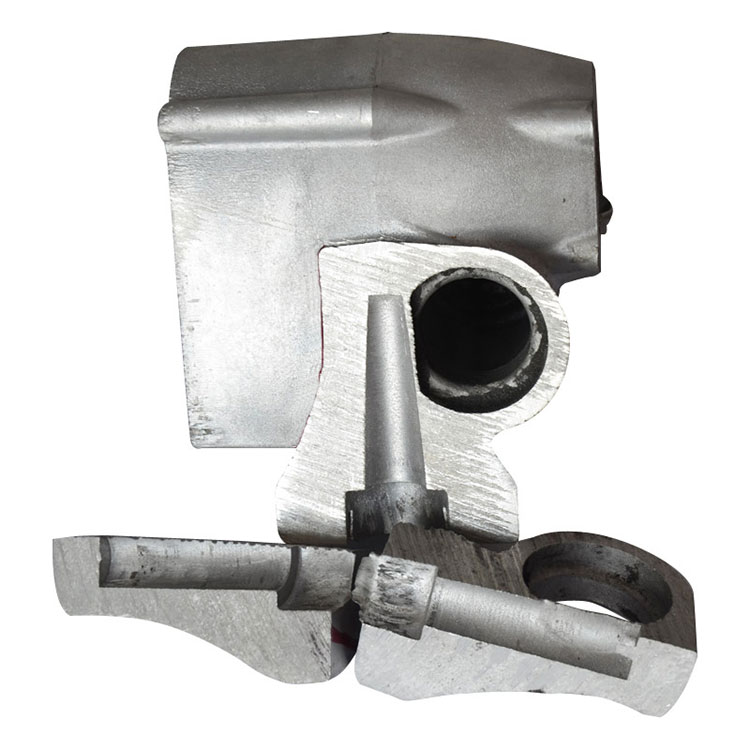
A356 Aluminum Casting is a manufacturing solution for producing lightweight, durable metal components with a favorable balance of strength, ductility, castability, and corrosion resistance. Xuxing provides aluminum casting solutions for industrial customers seeking components tailored to specific engineering and production requirements. The A356 alloy is particularly valuable when a component must combine complex geometry with dependable mechanical performance.
A356 belongs to the aluminum-silicon-magnesium (Al-Si-Mg) alloy family. Silicon improves molten metal fluidity and casting performance, while magnesium enables precipitation strengthening through appropriate heat treatment. These characteristics make A356 suitable for applications where conventional materials may be too heavy or may not offer the required combination of mechanical properties and environmental resistance.
Unlike aluminum alloys commonly associated with conventional high-pressure die casting, A356 is frequently processed through sand casting, gravity permanent mold casting, and low-pressure die casting. The best process depends on component geometry, production volume, dimensional requirements, and the intended mechanical properties.
For more information about available manufacturing options, explore Xuxing's aluminum casting solutions.
The performance of A356 aluminum casting begins with controlled chemical composition. Its silicon and magnesium content supports castability and heat-treatment response, while limits on impurities such as iron help preserve ductility and mechanical consistency.
Typical composition limits for A356.0 under commonly used specifications are summarized below. Buyers should confirm the applicable material standard and grade with their casting supplier before production.
| Element | Typical Specification Range or Limit (wt.%) | Primary Function |
|---|---|---|
| Aluminum (Al) | Balance | Provides the lightweight base material |
| Silicon (Si) | 6.5–7.5% | Improves fluidity and castability |
| Magnesium (Mg) | 0.25–0.45% | Enables precipitation strengthening |
| Iron (Fe) | 0.20% maximum | Controlled to support ductility and casting quality |
| Copper (Cu) | 0.20% maximum | Limited to help maintain corrosion resistance |
| Manganese (Mn) | 0.10% maximum | Controlled alloying constituent |
| Zinc (Zn) | 0.10% maximum | Controlled impurity or residual element |
| Titanium (Ti) | 0.20% maximum | May assist grain refinement |
Actual chemical requirements depend on the specified standard and product designation. The values above are representative limits, not a substitute for an approved material certificate.
A356 also has a density of approximately 2.68 g/cm³, making it substantially lighter than steel. Its final tensile strength, yield strength, elongation, and hardness depend on the casting process, section thickness, porosity, and heat-treatment condition. Consequently, engineers should evaluate certified properties for the actual component rather than relying on generic alloy values.
A356 aluminum casting offers several practical advantages for manufacturers developing components that must meet demanding performance and weight requirements.
These benefits make A356 attractive for structural and mechanical components. Nevertheless, successful results depend on engineering design, sound casting practice, and verification against the application's actual performance requirements.
Selecting the correct manufacturing process is as important as selecting the alloy. A356 is commonly associated with processes that support controlled solidification and, where required, subsequent heat treatment.
| Casting Method | Best-Suited Production Conditions | Main Considerations |
|---|---|---|
| Sand Casting | Prototypes, complex geometries, and low-to-medium production volumes | Flexible tooling and larger parts, but surface finish and dimensional consistency may require additional machining |
| Gravity Permanent Mold Casting | Repeated production of small-to-medium components | Reusable molds and relatively consistent surfaces; tooling investment must be justified |
| Low-Pressure Die Casting | Components requiring controlled filling and potentially improved structural integrity | Requires specialized equipment and careful pressure, temperature, and solidification control |
Conventional high-pressure die casting is not the usual first choice for A356 when full T6 heat treatment and high ductility are required. Entrapped gas and internal porosity can expand during solution heat treatment, potentially causing blistering or distortion. Any proposed process should therefore be validated for the required alloy condition and quality criteria.
For buyers comparing production methods, Xuxing's aluminum casting manufacturing information provides a useful starting point for discussing process suitability, tooling, and component requirements.
Heat treatment can significantly improve the mechanical properties of A356 aluminum casting. T6 is a widely used temper for components that require higher strength than the as-cast condition can provide.
The typical T6 treatment sequence includes three main stages:
Temperature, holding time, quench conditions, and aging parameters must follow the applicable specification and component requirements. Improper processing can lead to distortion, reduced ductility, or inconsistent properties.
Before approving a T6-treated casting, buyers should consider:
Not every application requires T6. The as-cast condition or another approved temper may be sufficient when the service loads and design requirements allow it.
Because it combines relatively low density with useful mechanical properties, A356 is used across several industrial sectors. The specific alloy condition and casting method should be selected according to the component's operating environment.
For critical components, suitability must be established through engineering calculations, material certification, and appropriate testing. An alloy's general reputation does not replace application-specific validation.
Reliable A356 aluminum casting depends on more than chemical composition. Melt cleanliness, mold design, filling behavior, feeding, solidification, and heat treatment all influence the quality of the finished part.
Manufacturers and purchasing teams should establish clear inspection requirements before production begins.
Good component design also matters. Uniform wall thickness, smooth transitions, suitable fillets, and well-positioned feeding features can help reduce casting defects and improve manufacturing consistency. CNC machining and surface finishing should be specified according to functional needs rather than added without a clear purpose.
Choosing an A356 aluminum casting supplier requires a balanced assessment of technical capability, production planning, quality assurance, and total project cost. The lowest initial quotation may not represent the best long-term value if it excludes necessary machining, testing, finishing, or defect prevention.
Before requesting a quotation, prepare the following information:
Discussing these details early allows the manufacturer to recommend a suitable casting method, evaluate tooling requirements, and identify potential design improvements before production starts. Buyers can also request sample parts and review inspection documentation before approving mass production.
Learn more about Xuxing's aluminum casting capabilities when evaluating potential manufacturing solutions for your project.
A356 aluminum casting is commonly used for automotive components, structural brackets, pump housings, impellers, industrial machinery parts, and selected aerospace components. It is particularly suitable when low weight, good castability, corrosion resistance, and heat-treatable strength are important.
Yes. Proper T6 heat treatment generally increases the strength and hardness of A356 aluminum compared with its as-cast condition. Actual tensile strength, yield strength, and elongation depend on the casting process, material quality, section thickness, and heat-treatment parameters.
A356 is an aluminum-silicon-magnesium alloy commonly used in sand, gravity permanent mold, and low-pressure casting, particularly when heat-treatment response and ductility are important. A380 is widely used for conventional high-pressure die casting because of its filling characteristics and production suitability. The better choice depends on geometry, mechanical requirements, production volume, and manufacturing process.
A356 generally offers good corrosion resistance in many environments. However, performance depends on the operating conditions, surface finish, exposure to chemicals or salt, and contact with dissimilar metals. Protective coatings may be necessary in aggressive environments.
Yes. A356 castings can be CNC machined to produce accurate holes, bores, threads, mounting faces, and sealing surfaces. Machining allowances, datum references, and dimensional tolerances should be defined before casting production.
Buyers can improve consistency by providing complete drawings, specifying the alloy and temper, defining critical defect limits, agreeing on inspection and testing methods, and requiring appropriate material and production traceability. Early collaboration between the design team and casting supplier can also reduce manufacturing risks.
A356 Aluminum Casting offers a practical combination of lightweight construction, castability, corrosion resistance, and heat-treatable mechanical performance. From automotive and industrial machinery components to pump housings and selected structural applications, it can support demanding designs when the alloy, casting process, heat treatment, and quality requirements are properly matched.
Xuxing helps industrial buyers explore aluminum casting solutions based on component specifications and manufacturing needs. Whether you are developing a new part, optimizing an existing design, or sourcing a reliable production partner, share your drawings, material requirements, target quantities, and inspection criteria with our team. Contact us today through Xuxing's aluminum casting page to discuss your project, evaluate suitable manufacturing options, and request a quotation for your next A356 aluminum casting application.


